Photo Caption & Contact Email

Banner Photograph: Members of the North Nova Scotia Highlanders in England, 1941 (courtesy of Robert MacLellan, Cape Breton Military History Collections)

Contact E-mail Address: brucefrancismacdonald@gmail.com

Friday, 7 January 2022

Private Howard Leslie "Ted" Pye—Died of Illness January 24, 1943

 Howard Leslie “Ted” Pye was born in Liscomb, Guysborough County, on December 8, 1913, the fourth of Leonard Whitman and Ida Alexandra “Lexie” (Hartling) Pye’s seven children. His nickname apparently derived from a pyjama or play suit known as a “teddy” that Ted wore as a child.

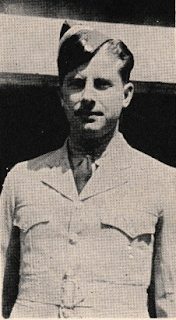
Pte. Howard Leslie "Ted" Pye

Ted had deep historical connections to the Liscomb area on both sides of his family. His mother Lexie was the grand-daughter of John Frederick Hartling, a descendant of “Foreign Protestant” settlers who came to Nova Scotia in the aftermath of the Acadian Expulsion (1755). It is believed that the family surname derived from the German “Hirtle.” John Frederick, known locally as “Fritz,” was born around 1816 and eventually settled in Spanish Ship Bay, where he married Sophia Walters and raised a family of nine children.

One of Fritz and Sophia’s six sons, Jacob, born in 1859, married Caroline “Carrie” Crooks. Jacob became Spanish Ship Bay’s first postmaster, a position he held from 1897 until his resignation in April 1931. Among his other endeavours, Jacob and his brother John operated a small water-powered mill in Bay Brook, producing laths and lumber for local construction. He and Carrie raised a family of five children in Spanish Ship Bay. Ida Alexandra “Lexie”—Ted’s mother—was their second child and eldest daughter.

On his father’s side, Ted had deep connections to Pye’s Head, the body of land that lies between Spanish Ship Bay and the eastern portions of Liscomb Harbour. Ted was a direct descendant of Thomas Pye Sr. and his wife, Bessie Aubold (Hawbolt). Born in Exeter, southwest England, around 1758, Thomas Sr. immigrated to Nova Scotia in 1773 and settled in Marie Joseph, Guysborough County, around 1789. In subsequent years, he and his sons submitted petitions for land grants in the Ecum Secum, Marie Joseph and Liscomb areas. In 1818, the applicants received grants that totalled 1,200 acres, divided into several parcels.

Two of Thomas Sr.’s sons, Charles and Leonard Pye, received a grant of 200 acres on Liscomb Harbour that included the major portion of the Pye’s Head peninsula. The brothers formally divided the land in 1822 and established family residences on the location, which provided easy access to the ocean and featured several sites suitable for the construction of wharves.

When Charles passed away in 1853, his land was purchased by Eben Jacob Locke, husband of Leonard Pye’s daughter Mary Jennet. Eben later sold most of the property to Mary Jennet’s brother, William Henry Pye.

Leonard Pye was active at sea for over 30 years. In May 1825, he registered the Lunenburg-built schooner Sally in his name and personally operated the vessel. After the Sally was lost at sea in December 1827, Leonard purchased and operated the 36-ton schooner Mary Jane, which he registered in November 1836.

By June 1844, Leonard was master of the British Queen, a two-masted, 54-ton schooner that he had built in Liscomb. The vessel was owned and operated by James and John Henry McNab, two Halifax merchants. Leonard purchased the ship from the McNab brothers in April 1849. By that time, he was active in coastal trade routes established between Nova Scotia, Newfoundland and the coast of Labrador, where he traded goods with the native population, in exchange for fish.

Leonard’s son, William Henry, sailed with his father and later became a coastal trader himself. According to family lore, he went to sea at age eight and took charge of the British Queen at age 14. William Henry received navigation instruction from a Mr. McDaniel, a Sherbrooke resident, and successfully completed the examinations for his Master Mariner’s certificate in Halifax.

Leonard passed away in the spring of 1852 at age 55. William Henry, administrator of his estate, equitably divided his father’s assets among family members. In subsequent years, William Henry purchased his mother’s share and as much of his sisters’ properties as he could acquire. The year prior to his father’s death, he had married Jane Eliza Davis, a resident of Ecum Secum West, and the couple built a home on a section of Pye’s Head overlooking Liscomb Harbour.

In 1857, William Henry served as a coastal pilot aboard the Gulnare, a surveying vessel hired by the Royal Navy to map the Nova Scotia coastline for the British Admiralty. A flat rock near the family home served as a survey reference point and still bears the appropriate carved markings.

William Henry continued to operate the British Queen, and later purchased another merchant schooner, the Agility, built in Port Medway in 1858. Family lore claims that the vessel operated as a blockade runner during the American Civil War, slipping through the North’s naval blockade to deliver British goods to Southern Confederate ports.

In May 1874, William Henry sold the Agility and the following year acquired the newly constructed A. M. Payne, named for a prominent Halifax merchant. He operated the new vessel for eight years. After selling the ship to a Shelburne County mariner, he “came ashore.” In his retirement years, William Henry operated the local customs house at times, and opened a store that provided the local community with basic goods.

In August 1910, William Henry deeded all of his property to his son Leonard Whitman Pye, who eventually dismantled his father’s Cape Cod house and built a new residence on the same foundation. Leonard had married Ida Alexandra “Lexie” Hartling, a Spanish Ship Bay native, in 1908 and the couple raised a family of seven children—daughters Alma Kathleen, Amy Rebecca, Leone Ida, Caroline Davidson, and Margaret Jane, and sons Stuart Allison and Howard Leslie “Ted.”

Leonard pursued a livelihood at sea for several years. Like his father, he operated the customs house and maintained a sustenance farm on Pye’s Head. He also left home for seasonal work, managing a lobster factory at Malagash in the spring and supervising apple harvesting in the Annapolis Valley in the autumn. The family briefly moved to Halifax in the early 1920s, but finding suitable accommodations for a large household was a challenge and they soon returned to Pye’s Head.

Leonard’s sons Allison (DOB July 18, 1910) and Ted were determined to go to sea. As the family no longer operated its own vessels, 17-year-old Allison made his first voyage to the West Indies aboard the schooner Esthonia in 1928, likely accompanied by 14-year-old Ted. The vessel, under the command of Howard Hartling—a relative of their mother’s—departed from Halifax on March 27 and safely returned to Nova Scotia after a five-month voyage.

Ted later sailed to the Turks Islands aboard the vessel Cape LaHave, only to become stranded when the vessel ran aground and was lost. Although news of the wreck soon reached the family, Ted’s whereabouts remained a mystery for some time. His youngest sibling, Margaret, recalled that he “just came walking down the road” one day.

Allison continued to work at sea, completing a total of four voyages on the Esthonia in 1928 and 1929. He made another schooner voyage to the Turks Islands aboard the James E. Newsome. While sailing vessels experienced a modest resurgence during the Great Depression, due in part to lower operating costs and fuel shortages, their use declined as the decade passed and steamships assumed the bulk of the Caribbean routes.

Allison made the transition to the new technology, joining the crew of the Lady Somers, one of Canadian National Steamships Company’s famous “Lady Boats,” for two voyages in 1930. He also served aboard its sister ships, the Lady Nelson and the Lady Rodney, from 1935 to 1939, logging a total of 23 voyages. In 1939, he gave up going to sea as “there was no future in it.” The timing of his decision proved fortuitous—during the Second World War, three of the four Lady Boats fell victim to German U-boats.

Allison completed the accounting program at the Maritime Business College and found work in Halifax. During the Second World War, he enlisted for service with the Royal Canadian Air Force and served as an accounts clerks with 11 Technical Service Unit, Montreal. Upon returning to civilian life, he worked for the Colonial Fertilizer Company in Windsor, NS. When Canada Packers purchased the company in the 1960s, he returned to Halifax, where he worked as an accountant.

Stuart Allison Pye in RCAF uniform

 Meanwhile, the episode aboard the Cape LaHave persuaded Ted to abandon seafaring in favour of safer pursuits ashore. He remained at home for a period of time, briefly returning to school before going to work with his father on Pye’s Head. Leonard owned a small boat that they used for lobster fishing.

After Leonard’s death in 1935, Ted may have worked in the Halifax dockyards for a while. He eventually returned to Pye's Head, although the exact date is unknown. Ted did some farming, maintaining a vegetable garden and tending livestock, particularly a large ox named Babe that he used for ploughing and hauling. At the time of his enlistment, Ted gave his address as Liscomb and listed his occupation as fisherman.

On June 26, 1941, Ted answered the call to military service, enlisting with the Canadian Active Service Force at Antigonish, NS. One week later, he reported to No. 61 Basic Training Centre, New Glasgow. On August 19, he completed his initial training and was assigned to the Vocational Wing, No. 6 District Depot, Halifax. Over the next three months, he took a trades course and was certified as “a qualified oxyacetylene welder” on November 25.

In early February 1942, Ted was transferred to the Royal Canadian Ordnance Corps Training Centre (RCOTC), Barriefield, Kingston, ON, for the next stage of his military service. On March 28, he was assigned to the Canadian Army Training School, Hamilton, and in mid-June returned to RCOTC Barriefield, where he remained throughout the summer.

On September 1, 1942, Ted received permission to marry Miss Elizabeth Violet “Lizzie” Knight “on or after 1 - 11 - 42.” Ted had known Lizzie for some time. She was born in Halifax, but her mother, Elizabeth Ethel Morris, was from West Liscomb. Lizzie met Ted while she was visiting her grandmother, Bertha Elizabeth (Berrigan) Morris. His sisters recalled Ted rowing across the harbour to meet her at the Morris family home.

While Lizzie and Ted’s marriage was initially scheduled for November, events moved more rapidly than anticipated. Ted officially qualified as “Welder Group ‘B’ Grade I” on September 19, and four days later received 10 days’ leave. A note in his service file, dated September 24, 1942, states:

“Having been granted permission to marry on or after 24/9/42, was married on the 24/9/42 to Miss Elizabeth Violet Knight [at Halifax]. New address - 206 Grafton St., Halifax, NS.”

Lizzie and Ted

Upon returning to duty on October 1, Ted was officially “struck off strength” by the Canadian Ordnance Corps Training Centre and awaited orders to proceed overseas. He departed Halifax in late October and disembarked in the United Kingdom on November 5, 1942.

As with all arrivals, Ted was assigned to the Canadian Ordnance Reinforcement Unit. The Corps was responsible for procuring all material items required by the Canadian Army, such as weapons, clothing and mechanical transport. Until 1944, its personnel also maintained and repaired Army equipment.

On November 25, Ted was assigned to the newly created 1 Canadian Ordnance Beach Detachment (COBD), whose personnel would assist infantry units in beach landings as part of an invasion of Nazi-occupied Europe. Their mission involved establishing assembly areas for men and vehicles arriving on shore and overseeing their movement inland. The unit was also responsible for creating storage areas for fuel, ammunition, rations and other supplies as they came ashore. As infantry units proceeded inland, the unit would supervise the evacuation of the dead and wounded, prisoners of war, and salvaged equipment.

Well before Ted’s arrival in the United Kingdom, Canadian units had transitioned from defensive roles to training for an invasion of the European continent. Personnel rehearsed scrambling from naval vessels into landing craft and making their way ashore. These exercises began in England but later shifted to Scotland, where sandy beaches and mountainous terrain provided ideal staging grounds for large-scale operations that preceded the Allied landings at Dieppe (August 1942), Sicily (July 1943) and Normandy (June 1944).

On December 7, 1942, Ted was attached “for all purposes” to the 11th Base Ordnance Depot, Royal Army Ordnance Corps (RAOC). He probably spent the month training with British soldiers who shared their expertise with the inexperienced Canadians. The first indication of Ted’s involvement in practical training occurred on January 10, 1943, when he was sent with his unit to CTC [Combined Training Centre] Castle Toward, Scotland. Built in 1820 to replace a medieval structure that was the home of Clan Lamont, the castle is located in the Argyll and Bute district of Scotland, on the shores of the Upper Firth of Clyde, approximately 70 kilometres west of Glasgow.

During the war, the British military requisitioned the castle and its grounds and awarded it the Royal Navy commission of HMS Brontosaurus. Personnel stationed at the location learned how to operate a variety of landing craft, and rehearsed the loading and unloading of men, tanks and armoured vehicles. British Prime Minister Sir Winston Churchill and Rear Admiral Lord Louis Mountbatten were among the prominent figures who visited the location during the war.

British and Commonwealth soldiers trained in landing operations staged on the Isle of Bute, to the west of Castle Toward. The men were billeted in private homes in Rothesay, the island’s largest town. After the war, residents fondly remembered the Canadians, particularly their unusual accents and generosity in sharing chewing gum, chocolate bars and sports cards from their cigarette packages with local children.

On January 22, 1943, Ted was admitted to Rothesay Memorial Hospital, Scotland, where he was diagnosed with a cerebral haemorrhage. His service file does not describe its cause. A later document stated that he had suffered a “heart attack during combined operations on training.” Unfortunately, there are no medical documents in his service file to provide further details.

Two days later, perhaps due to worsening health, military authorities decided to transfer Ted to a military hospital on the outskirts of Glasgow. An “Extract from an Entry in a Registry of Deaths” for the District of Buchanan, County Sterling, Scotland, states that Ted died at 5:22 pm January 24, 1943, “in an ambulance on a journey between Rothesay and Military Hospital, Buchanan.” The entry identifies the cause of death as septicaemia, a conclusion repeated in several other official documents.

That same day, military authorities sent a telegram to Ted’s wife Lizzie, informing her: “Regret deeply F88060 Private Howard Leslie Pye officially reported died twenty-fourth January 1943 as result of cerebral haemorrhage.” Ted’s remains were transported to Surrey, UK, where he was buried in Brookwood Military Cemetery, Woking, Surrey, on February 2, 1943.

Details on the Pye and Hartling genealogies was obtained from Ruth Legge’s detailed work, “Shreds and Nooks of Land—A History of Liscomb, Spanish Ship Bay and Geggogin, Guysborough County.” Special thanks to Ted’s nephew and nieces who helped assemble his story. Don Hatton and Muriel Elliott, Pye’s Head, NS, and Margaret Pye Arnaudin, St.-Jean-sur-Richelieu, QC, provided details on Ted and Allison Pye’s personal lives. Denise McMurtry, Carp, Ottawa, ON, shared a photograph of Ted in uniform and a picture of Ted with his wife Lizzie. Margaret Pye Arnaudin provided a photograph of her father, Stuart Allison, in uniform.

Thursday, 6 January 2022

3rd Mate James Colin Cameron, DSM—Perished at Sea January 20, 1943

James Colin Cameron was born in Canso, Guysborough County, on November 18, 1907, to James and Harriet Elizabeth (Condon) Cameron. Colin traced his Nova Scotian roots to his grandfather Angus Cameron. Born in Scotland in 1823, Angus immigrated to Nova Scotia with his family at age five. A shoemaker by trade, he married Ellen Grant, an Antigonish County native, in 1848. The couple established residence in Canso, where they raised a family of seven children—two daughters, Margaret “Maggie” (DOB May 8, 1851) and Mary “Minnie” (DOB June 16, 1864), and five sons.

3rd Mate James Colin Cameron in civilian lite

Angus and Ellen’s three oldest boys—Frederick A. “Fred” (DOB December 26, 1850), James W. (DOB January 2, 1857) and Duncan (DOB August 1, 1858)—learned the shoemaker trade from their father. By 1891, Angus had established a “general merchandise” business in the community, a commercial endeavour that eventually employed the three oldest Cameron boys, as well as younger brothers Angus Colin (DOB January 6, 1865) and John Grant (DOB March 29, 1866).

Ellen (Grant) Cameron passed away on June 11, 1900, and was interred in Star of the Sea Roman Catholic Cemetery, Canso. Angus died before the end of the decade, leaving his business in the hands of his sons. James W., the third-oldest of the Cameron boys, married Harriet Elizabeth “Bessie” Condon, daughter of Thomas and Anastasia (Kennedy) Condon, in Guysborough town on September 25, 1893. James and Bessie established residence in Canso, where they raised five children—Thomas Theophilus “Theo” (DOB November 10, 1893); Anne/Anna (DOB November 5, 1895); Evelyn Cecilia (DOB May 2, 1897); James Colin and Joseph Bernard (DOB August 9, 1910).

Tragically, only one of James and Bessie’s five children survived into old age. Joseph succumbed to diphtheria on December 4, 1917, at age seven. Neither of their daughters married. Evelyn experienced “epileptic fits” during adolescence and was diagnosed with tuberculosis at age 20. She passed away at home on April 25, 1922, one week shy of her 24th birthday. Ann also suffered from tuberculosis and eventually developed pulmonary oedema (fluid in the lungs). She died in Canso on March 11, 1942, at age 46.

Theo, the oldest of the Cameron siblings, initially relocated to Halifax, where he worked as a bank clerk. In April 1919, he crossed the United States border at Vanceboro, Maine, on his way to New York City. He established residence in Manhattan and obtained a clerk’s position with the New York Stock Exchange. Meanwhile, back in Canso, his father James’ health was declining. Diagnosed with tuberculosis, he was ill for “some considerable time” before passing away from pneumonia on February 15, 1922.

Following his father’s death, Theo’s younger brother Colin remained in Canso for several years. In mid-summer 1926, the 18-year-old travelled by train to Montreal, QC, and crossed the American border at Rouses Point, New York, on August 8, 1926. He then joined Theo in New York City, where he planned to establish permanent residence.

Colin soon found work as a “clerk” with a local “telephone company.” According to the 1930 United States census, Bessie had relocated to New York a year prior to Colin’s arrival. At the time of the census, she and her two sons were living together in Manhattan. In fact, Colin completed a Declaration of Intention to become an American citizen on June 10, 1929. The document listed his occupation as “seaman.”

In fact, Port of New York records indicate that Colin served as “First Messman” on an American steamship that arrived from Havana, Cuba, in late May 1929. The following month, he departed for “foreign ports” aboard the steamship Liberty, listed on the vessel’s manifest as “A.B.”—able-bodied seaman, a member of the ship’s deck crew. He made a second voyage to Southampton, England, in October 1929, as a “room cleaner.” He appears to have continued to work at sea throughout the 1930s, although details of his service are not available.

By early April 1940, Colin had advanced to the rank of “bosun”—senior deck hand, responsible for overseeing the deck crew’s operations—aboard the tanker SS Royal Arrow. Port of New York records list a round-trip voyage to Willemstad, Curacao, North West Indies, that spring, followed by a trip to Naples, Italy, aboard the same vessel. According to both documents, Colin had amassed 11 years of merchant marine service by that time.

The outbreak of the Second World War in Europe soon made merchant marine voyages across the North Atlantic a perilous undertaking.  Widespread German U-boat activity commenced in mid-1940 and continued with intensity for the next three and a half years. Despite the dangers, Colin continued to work at sea. In August 1940, he submitted a Petition for Naturalization and registered for the United States military draft two months later. His occupation would likely have warranted an exemption, should he be “called up.” On February 12, 1941, Colin officially became a US citizen.

By late 1942, Colin had advanced to the position of 3rd Mate aboard MS Brilliant, an American “motor tanker” owned and operated by Socony-Vacuum Corporation, the world’s third-largest oil company at that time. On November 9, 1942, the vessel left New York on its way to Belfast, Ireland, carrying more than 90,000 barrels of oil and gasoline as part of an Allied merchant convoy.

MS Brilliant, New York, November 7, 1942 (Source: Auke Visser's MOBIL Tankers & Tugs Site)
 

Unbeknownst to the vessels, a pack of German U-boats tracked their progress as they sailed past Newfoundland and veered eastward into the North Atlantic. At 0956 hours November 18, German U-boat U-43 surfaced and fired a torpedo that struck MS Brilliant between its number five tank and pump room. The impact blew a 12-meter-wide hole in its hull, destroyed three of the vessel’s below-deck tanks, and created leaks in three other port side compartments.

The subsequent explosion sent a burst of flame into the air but fortunately did not ignite the vessel’s flammable cargo. Crew below the deck immediately secured the engines, which were undamaged and continued to operate. The ship’s Master sounded an alarm calling all hands to “general quarters” and the crew immediately prepared to lower several lifeboats into the water.

One lifeboat at the forward deckhouse would carry the Master, several officers and a group of Navy Armed Guards who were aboard the ship. A second lifeboat at the vessel’s stern was also readied for deployment. As the forward lifeboat was being outfitted, the ship’s Master ordered Colin to gather several items—navigational equipment, the ship’s papers and cigarettes—and place them in the boat. 

Colin quickly returned with the requested items, but departed again to retrieve a new Officer’s cap in his quarters. During his absence, crew members lowered the forward lifeboat into the water. By the time Colin returned, it was halfway along the vessel’s side. He shouted at its occupants but they did not respond. While the Master intended to remain alongside the tanker to determine if it would remain afloat, rough seas soon swamped the lifeboat, dumping the men into the ocean. A nearby British rescue ship quickly came to their rescue, retrieving all without loss or injury.

Meanwhile, Colin decided not to head toward the stern lifeboat, as he feared the vessel’s rear portion might explode at any time. Instead, remembering that there was a lifeboat on the other side of the bridge, he headed in that direction only to run directly into a Navy Armed Guard officer. The two men landed on the deck, erupting in laughter at the absurdity of their circumstances.

The officer informed Colin that he was now in charge of the vessel, as all other merchant marine officers had left with the Master. Colin immediately entered the wheelhouse and turned off the general alarm. He then contacted the engine room, where the third engineer informed him that none of the equipment had been damaged in the explosion.

Having assessed the situation, Colin decided that it might be possible to save the vessel. He activated the automatic fire suppression system and within minutes the flames on the deck began to subside. Around that time, a corvette with the convoy escort signalled the men aboard Brilliant, ordering them to “abandon ship.” Colin responded that, as the situation appeared to be under control, he planned to bring the vessel into the nearest port.

The corvette repeated its order but Colin remained firm—he and the remaining crew on board were determined to save the ship. The convoy commodore then signalled for the tanker to proceed to St. Johns, Newfoundland. Colin slowly turned the crippled vessel around and headed west. Meanwhile, the convoy resumed its eastward journey.

The men aboard the tanker were well aware that a German U-boat might be lurking nearby, waiting to resume the attack. Fortunately, seas were light as Brilliant began its journey to safety. Steel plates and beams loosened by the torpedo’s impact groaned as the ship cut through the water. In response, the crew operated the engine at “slow ahead” speed to minimize the strain on the hull and avoid the possibility of the ship breaking in two.

Two sailors shared bridge watches while others manned the ship’s deck guns, ready to fire should a U-boat surface nearby. The skeleton crew was soon alone in a vast expanse of ocean as the vessel slowly made its way westward. Colin remained on the bridge throughout the journey, he and the crew watching the damaged stern sway from side to side as the ship cut through the water.

Fortunately, seas remained calm and winds were light as the tanker crept along. After several days, the crew spotted a small fishing schooner whose skipper guided them into Musgravetown, 30 kilometers north of Clarenville, Newfoundland, on November 24. The damaged ship had traveled a distance of 500 kilometres at a speed of three knots without being spotted by a U-boat. The Brilliant’s entire crew—nine officers, 33 sailors, and 18 Navy Armed Guards—had survived the harrowing incident without loss or injury.

James immediately turned on the ship’s radio and contacted Naval officials, who ordered him to bring the tanker to St. Johns, where the crew remained for several weeks. As the required repairs could not be completed there, naval authorities instructed the men to take the ship to Sydney, NS. On December 18, 1942, the tanker left St. Johns harbour “in convoy” but immediately encountered gale force winds and rough seas, forcing the ship to return the following day.  

Meanwhile, the United States Marine Commission learned the details of the November 18 attack, particularly Colin’s role in saving the damaged oil tanker. The Commission determined that his actions warranted special commendation and awarded him the US merchant marine’s Distinguished Service Medal (DSM). The official citation stated:

“For especially meritorious service under unusual demands and hazards….Junior Third Officer Cameron was the remaining deck officer on board…. [W]ith the heroic assistance of the remaining crew members, he accomplished the extinguishing of deck fires and directed the Chief Engineer to start the engines in an effort to save the ship and her valuable cargo. He then brought her through heavy weather and dangerous waters to the nearest safe port…. His personal courage and devotion to duty will be an enduring inspiration to seamen of the United States Merchant Marine everywhere.”

According to an article published in The United States Naval Proceedings, October 1958, a monthly US Naval Institute publication, the Marine Commission sent a telegram to St. Johns on January 18, 1943, instructing Colin to make his way to Washington, DC, by Navy airplane to receive the DSM. By unfortunate coincidence, Brilliant had left the harbour several hours earlier, on its way to Halifax, NS, for repairs.

Workers in St. Johns had placed a temporary patch across the opening in the vessel’s hull during its time in the harbour. On board for the journey was Andrew Lagan, a merchant marine Master sent to Newfoundland to guide the vessel to its destination. A crew of 54 sailors, including 3rd Mate James Colin Cameron, was also on board.

On this occasion, the British tugboat HMS Frisky towed the ship to its destination, while HMS Chelsea provided escort protection. Once out to sea, weather conditions quickly worsened. As a precaution, all hands donned immersion suits and life jackets as the vessel continued on its way.

Photograph of Brilliant's stern section prior to sinking (Source: Auke Visser's MOBIL Site)

Two days into the journey—January 20, 1943—persistent high winds and heavy seas split the damaged tanker into two pieces. The ship’s “forepart” sank immediately, taking all 11 men aboard that section of the vessel under with it. The ship’s Master, two officers—including Third Mate James Colin Cameron—four crew members, three armed guards and a coastal pilot perished in the incident.

The vessel’s “after-part” remained afloat, drifting southeast for five days with 44 crew members aboard before a lifeboat from the tugboat and another from HMCS Goderich managed to safely extract the men. They were then transported to Argentia, Newfoundland, arriving there on January 24. The tanker’s broken section was towed to nearby Placentia Bay, but sank the following day.

At time of Colin’s death, Bessie was living in Canso, having returned sometime prior to 1940. At an unknown date, Colin’s brother Theo travelled to Washington, DC, where he received the DSM on his behalf. 

Theo Cameron (right) accepting Colin's DSM (Source: MM DSM Recipients—Ian Watt)

Bessie Cameron passed away in her Canso home on April 14, 1946, and was laid to rest in Star of the Sea Cemetery. Her son Theo was the informant on her death certificate. Theo Cameron died in 1984 and was buried in Star of the Sea Cemetery, Canso, beside his grandmother Ellen. The exact location and circumstances of his death are unknown at this time.

Special thanks to Frank Streicher, Halifax, NS, who reconstructed the photograph of James Colin Cameron from a poor quality image attached to his 1938 Declaration of Intent US citizenship application. Frank also enhanced the DSM photograph of Theo Cameron and DSM recipients. 

Sunday, 5 December 2021

Flight Sergeant Douglas Seaman Cameron—Accidentally Killed January 3, 1943

 Douglas Seaman Cameron was born at Aspen, Guysborough County, on June 18, 1917, the oldest of George Leibert and Alma (McKeen) Cameron’s five children. Douglas was a direct descendant of Dougal Alistair Cameron, born at Kilmallie, Argyllshire, Scotland, on June 18, 1786. Dougal immigrated to Nova Scotia between 1825 and 1835, and was head of one of Cameron Settlement’s founding families.

Flight Sergeant Douglas Seaman Cameron

Among Dougal’s children was a son, John Dougal “Short John,” born at Fort William, Lochaber, Scotland, in 1827 or 1828. John Dougal accompanied his father to Nova Scotia. At the time of the 1871 Canadian census, he was residing at Caledonia, Guysborough County. Later records identify his place of residence at Forks of St. Marys. John Dougal passed away at Aspen in 1892, and was laid to rest in Evergreen Cemetery.

John Dougal’s son, Dougal/Dougald Archibald “Archie,” was born at Caledonia or Aspen on October 15, 1864. Archie married Margaret Isabelle “Maggie” McDonald, daughter of Hugh and Catherine McDonald, Lochaber, on June 11, 1894. Archie and Maggie’s oldest child, George Leibert, was born at Aspen, Guysborough County, the following year.

On October 27, 1916, Leibert married Alma Margaret McKeen, daughter of Samuel and Eliza McKeen, Aspen. While Alma’s family also traces its roots to the British Isles, her ancestors followed a much longer and different route before arriving in Nova Scotia. The family’s North American pioneer, John McKeen, was born at Londonderry, Ireland, in December 1700 and immigrated to the American colonies with his family, arriving at Boston Massachusetts, on August 4, 1718.

Around 1741, John married Martha Cargill at East Darby, New Hampshire. The couple eventually settled close to the mouth of the Connecticut River—across Long Island Sound from Long Island, New York—where four of the couple’s five children were born. John established a shipping and supply company that operated routes to Boston, Portsmouth, New Hampshire, and St. John, New Brunswick.

In 1760, the family relocated to Truro, where they were among the community’s earliest settlers. John and two of his sons—William and John Jr.—were also “grantees” of the township established there, receiving adjoining lots. At the time, the community consisted of 60 families. John Sr. and his wife Martha both passed away at Truro on the same day—December 30, 1767—and were laid to rest in the old Presbyterian Cemetery.

Following his father’s passing, John Jr. assumed operation of his supply vessel. He married twice—first to Rachel Johnson, a marriage that resulted in the birth of three sons and two daughters, and then to Rachel (Duncan) Archibald, a union that produced one son. John Jr. made frequent trips to St. Marys, NS, where four of his sons—John, Samuel, Adam and William—eventually settled, along with his brother David and sister Margaret.

After his second wife’s passing, John Jr. moved to St. Marys, where he resided with his youngest son William until his passing.  Born at Truro on September 13, 1857, William married Catherine Kirk, daughter of William and Catherine (McDonald) Kirk, Pictou, and established residence on “McKeen Hill,” Aspen, where the couple raised a family of 15 children.

One of William and Catherine’s children was a son, Samuel G. McKeen, born on May 26, 1825. Samuel G. married Margaret Taylor McKeen, daughter of Samuel and Margaret (Glencross) McKeen, in 1852. Samuel G. and Margaret’s son, Samuel Thomas, was born at Melrose around 1865. Samuel Thomas married Elizabeth “Eliza Bessie” Carthew and raised a family of three children—two sons, Clarence and William, and a daughter, Margaret “Alma.”

Alma McKeen married George Leibert Cameron in a ceremony held at East River St. Marys on October 27, 1916. The couple’s first child, Douglas Seaman, was born at Aspen the following year. A daughter, Olive Mildred, joined the household on February 14, 1919. At the time of the 1921 Canadian census, the family of four was living at Aspen, with Leibert’s occupation listed as “farmer.” His parents, Dougal and Margaret Cameron, resided next door.

Sometime shortly after 1921, the Cameron family relocated to Iroquois Falls, ON, where Leibert went to work for Abitibi Power and Paper Company. Established in 1914, its Iroquois Falls plant quickly became a major supplier of newsprint to the Canadian market. Three more children were born after the couple’s move to Iroquois Falls—sons George Bruce (YOB 1924) and John Leibert “Jack” (DOB May 31,1932) and a daughter Margaret (YOB 1933).

Douglas Seaman Cameron attended Iroquois Public School from 1924 to 1934 and went on to complete two years of studies at Iroquois Falls High School. Upon leaving school in 1936, he commenced employment at Abitibi Power and Paper, but left in 1938 because the “paper mill began running short time.”

Douglas then secured a job as a “diamond driller” [miner] with Pamour Gold Mines, Iroquois Falls, but left the position after 18 months because the “paper mill began to run full time.” During his employment underground with Pamour, Douglas was “hit on [the] left temple with [a] wrench.” The employment record in his service file provided further details:

“Knocked over but not unconscious. No headache or nausea following this. X-ray negative for fracture. Off work (underground) for four weeks but not confined to bed or house at all.”

In mid-1939, Douglas returned to work at Abitibi Power and Paper. In late September 1940, he submitted an application to the Royal Canadian Air Force (RCAF), requesting a “flying duties” assignment. At the time, Douglas made reference to participating in a school cadets program, particularly pins that he earned “for shooting.”

On October 19, Douglas completed an interview at an RCAF Recruitment Centre at North Bay. The interviewer provided a brief assessment of his suitability for service: “Bright… seems very willing, should be o.k. after some training for air gunner.” Douglas returned to Iroquois Falls for several months before attesting with the RCAF at Hamilton, ON, on January 29, 1941, with an initial rank of Aircraftman Class II. Two days later, he departed for Brandon, MB, for basic training.

Douglas returned to Toronto, ON, in early March and remained there until April 20, when he was assigned to No. 5 Equipment Depot, Moncton, NB. He spent three months at the depot, awaiting orders to resume his courses.

On July 20, Douglas commenced wireless operator training at No. 1 Wireless School, Montreal, QC. After successfully completed the course, he was promoted to the rank of Leading Aircraftman on August 21. Douglas remained in Montreal throughout the autumn months, logging flying time and completing additional ground training courses. During that time, he placed 44th in a class of 139 recruits, with an overall grade of 81 %, and received authorization to wear a Wireless Operator’s badge.

On December 7, Douglas was “taken on strength” at No. 1 Bomber & Gunnery School, Jarvis, ON, for the final Canadian phase of his training. Over the next four weeks, he completed ground training courses, placing 32nd in a class of 50 cadets. Douglas also logged approximately 10 hours’ flying time, earning a grade of 77.7 % and placing 21st in his air training assessment. His performance warranted an “above average” rating. One instructor commented that he was “[a] hard worker, attentive at all times. Eager to make good.” Another described Douglas as “[a] popular man, reliable and trustworthy.”

Douglas earned his Air Gunner’s badge on January 3, 1942, and was promoted to the rank of Temporary Sergeant with pay. Three days later, he received two weeks’ embarkation leave and likely returned home for a visit. In mid-January, Douglas was attached to No. 3 Y Depot, Debert, NS, where he awaited orders to depart for overseas. He left Halifax on January 24, 1942, and arrived in the United Kingdom two weeks later.

On February 10, Douglas reported to No. 3 Personnel Centre, Bournemouth, UK. One month later, he “remustered” as a Wireless Operator/Air Gunner Class 2, and was assigned to No. 1 Signals School for further training on March 17, 1942. He then proceeded to No. 3 (O) Air Observers School on May 11, and commenced the final phase of his overseas training at No. 3 Radio School on June 10.

Having successfully completed the requirements for active duty, Douglas was promoted to the rank of Temporary Flight Sergeant on July 5. Following a 12-day leave at mid-month, he departed for No. 5 (C) Operational Training Unit (OTU), Turnberry, Scotland, on July 28.

OTUs provided RCAF personnel with their first opportunity to train aboard the aircraft in which they would serve. Air crews were also assembled at this stage, allowing the men to form a cohesive team during training before entering active service. Douglas’s crew mates were all Canadians—Pilot Sgt. Gilmar Innis Morrison, Vancouver, BC; Navigator Pilot Officer Thomas Harold O’Neil, Hamilton, ON;  and Wireless Operator/Air Gunner Sgt. George Ernest Walker, Outremont, QC.

On September 22, 1942, the crew was assigned to a Torpedo Training Unit located at Abbotsinch, UK. One month later, the four men proceeded to 201 Group for active service. Formed in September 1939 from the Royal Air Force’s Middle East General Reconnaissance Group, the unit was responsible for coastal surveillance and provided vital information to strategic and tactical Allied units during the 1942 North African campaign.

On January 1, 1943, Douglas and his crew mates were attached to No. 39 Squadron, an active operating unit, for torpedo training. A regular bombing squadron at the time of the war’s outbreak, No. 39 Squadron was posted to the Mediterranean theatre in the spring of 1940 and transitioned to a maritime reconnaissance and anti-shipping role.

Following Italy’s entry into the war, No. 39’s aircraft conducted several bombing raids in Italian East Eritrea, after which its crews converted to operating Bristol Beaufort torpedo-bombers in August 1941. The Squadron’s personnel participated in anti-shipping operations for the remainder of the year and conducted their first torpedo attack on enemy shipping in late January 1942.

While No. 39 took part in a mid-June 1942 attack on the Italian battle fleet, its primary duties were mine-laying sorties and torpedo attacks on enemy shipping. Later that year, the Squadron provided support for Operation Torch—the allied invasion of North Africa. Briefly located in Egypt during the autumn and winter of 1942-43, the Squadron mainly operated out of the island of Malta until February 1943.

Two days after joining No. 39 Squadron—January 3, 1943—Douglas’s crew climbed aboard Beaufort DW 825 for a routine torpedo-training exercise in the Gulf of Suez, southwest of Cairo, Egypt, with HMS Arpha—a British naval vessel—playing the role of “target ship.” Documents in Douglas’s service file provide details on the subsequent events. A “Report on Flying Accident or Forced Landing Not Attributable to Enemy Action” states:

“This was the pilot’s first trip since completing a short torpedo course at Abbotsinch. He was detailed to complete two circuits and bumps prior to re-accustoming himself to flying low over the seas in the Low Flying Area. He was briefed not to fly dangerously low, not to attack the target or other shipping, and not to carry out any steep turns over the water.”

At approximately, 10:50 am, “a muffled explosion was heard and a Beaufort was observed about two miles from the ship flying close to the sea, and apparently in difficulties.” The aircraft plunged into the sea, prompting HMS Alpha and a nearby RAF launch to immediately proceed to the crash site. One crew member—Pilot Sgt. G I. Morrison—“was picked up alive, but badly injured. [Navigator] P/O O’Neil was picked up dead. The remaining two crew members [wireless operators/air gunners] were not located.” Sgt. Morrison was rushed to 13th General Hospital, where he succumbed to his injuries the following day.

The Report, dated the same day as the incident, proceeded to assess possible reasons why the aircraft struck the water:

“This may have been caused (1) by engine or other failure[,] but as the aircraft completed a satisfactory sortie prior to this sortie and was a most dependable aircraft, this is thought unlikely. (2) An error of judgement by the Pilot in that he completely misjudged his height or flew dangerously low, or (3) He failed to screw his throttles up and they slipped back[,] causing the aircraft to sink and hit the water.”

Wing Commander A. M. Taylor, who compiled the report, stated that he considered number two “the most likely reason” for the accident. Station Commander G. M. Knocker agreed, commenting:

“The pilot Sgt. Morrison came out to M. E. [The Mediterranean Expeditionary Force] by Sea and West Coast air route. Instructions have been given that in future pilots reporting straight to 5 METS [Meteorological Squadron] who have not flown aircraft out are to do at least two hours local flying before recommencing low flying [training] over the sea.”

Pilot Sgt. Morrison and Navigator Pilot Officer O’Neil were laid to rest in Suez War Memorial Cemetery, Suez, Egypt. The remains of the other two crew members—Wireless Operators/Air Gunners Sgt. George Ernest Walker and Douglas Seaman Cameron—were never recovered.

On October 29, 1943, Leibert Cameron received an official RCAF casualty notification telegram, informing him that his son Douglas, “previously reported ‘missing’ believed killed 3-Jan-43 as a result of a flying accident (overseas) (operations over the Gulf of Suez, Egypt) [is] now ‘presumed dead’ 3-Jan-43 for official purposes.” A subsequent letter from RCAF Records Officer T. K. McDougall, dated October 18, 1944, informed Leibert that Douglas has been posthumously promoted to the rank of Flight Sergeant, effective July 5, 1942.

Flight Sergeant Douglas Seaman Cameron’s name is engraved on the Alamein Memorial, located at the entrance to Alamein War Cemetery, Alamein, Egypt. The Land Forces panel contains the names of 8,500 military personnel who died in the Mediterranean theatre and have no known graves. The Air Forces panel displays the names of more than 3,000 Commonwealth airmen who died during Mediterranean operations and have no known final resting place.

Photograph of Flight Sergeant Douglas Seaman Cameron courtesy of Brenda (Cameron) & Pat Britton, Iroquois Falls, ON. Genealogical information on the McKeens of Aspen courtesy of Gerry & Melodie (McKeen) Madigan, Shubenacadie East, NS. Genealogical information on Douglas's Cameron ancestors courtesy of David Brown, Lochaber, NS.